Abnormal AI cut research time by 10 hours per week
About Abnormal AI
Cybercriminals are using AI to craft attacks that traditional tools can’t detect. For state and local governments handling sensitive data, the stakes are high.
Abnormal AI was built to stop these attacks, using behavioral AI to detect threats before they reach inboxes. Today, Abnormal protects more than 3000 organizations, including a quarter of the Fortune 500.
Zach Oxman, AVP for U.S. State, Local Government and Education, sat down with us to talk about what it takes to sell AI-native security into one of the most complex buying environments, and how Starbridge is helping his team identify and win opportunities earlier.
Navigating a complex GovTech landscape
Selling into the government requires patience and precision. Budgets are tightly scrutinized, procurement cycles are slow, and agencies approach new technologies cautiously.
“Public sector looks at everything through the lens of risk. In a world where even private organizations are struggling to figure out how to adopt AI, the public sector is asking: how do we just not do something wrong?”
That caution makes trust critical when introducing AI-driven cybersecurity solutions.
The challenge: fragmented data
For companies selling into the government, the challenge isn’t a lack of data, it’s connecting the dots.
Before Starbridge, Abnormal’s team gathered intelligence from a wide range of sources: strategic plans, board meeting minutes, procurement records, and competitive data.
“My biggest concern as a leader was: are my reps truly combing through everything that’s available? What signals are we missing? Do they have a complete picture of an account and the problems we’re trying to help solve?”
Different reps approached research differently, which meant important signals could easily be overlooked.
How Starbridge powers the motion
Today, Starbridge centralizes that intelligence and surfaces the buying signals that matter most.
The team also relies on Starbridge to prepare for discovery calls. Procurement intelligence, such as purchasing thresholds, approval processes, and past contracts, helps them approach agencies with a clearer understanding of how decisions are made.
That visibility enables a more consultative sales approach.
Closing the public sector data gap
Looking ahead, Zach sees Starbridge playing an even bigger role as Abnormal prepares for conference season and expanded outreach.
For Zach, the bigger picture is solving a broader challenge across GovTech.
“There’s a gigantic data problem in public sector sales. Having Starbridge there to solve that first, and then power the go-to-market motion, has been a big differentiator. Starbridge doesn’t just help us move faster, it helps us move faster in the right direction.”
Learn more about how starbridge powers Abnormal AI here.
Customer testimonials
What teams say after switching to Starbridge.





Explore our use case library
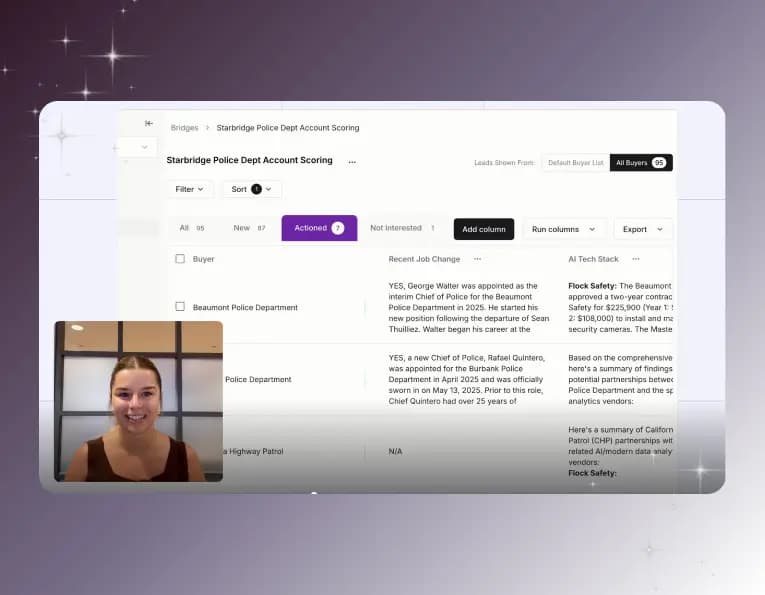 Automate account research with AI agentsStop manually researching accounts. Starbridge AI agents automate account research by monitoring buying signals 24/7 and surfacing the right contacts.
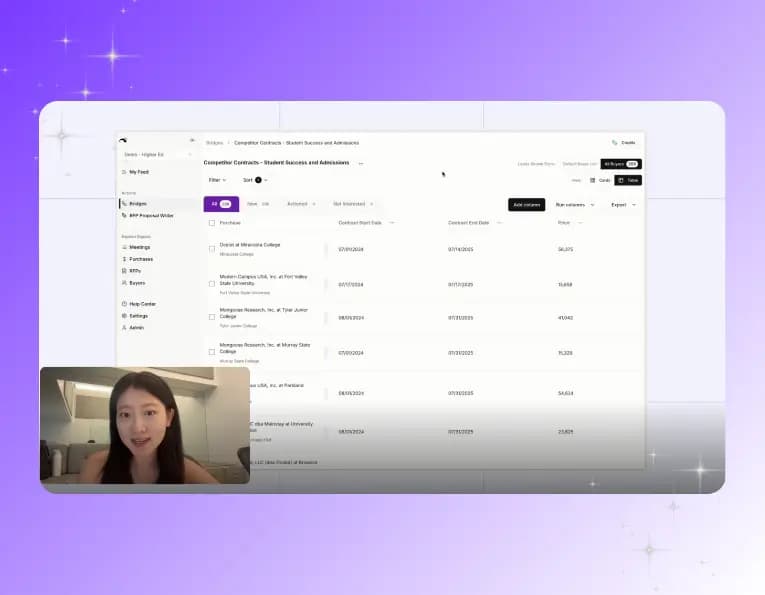 Identify competitor contract expiration datesThe RFP is usually a formality. Starbridge surfaces competitor contract expiration dates so your reps reach accounts before the renewal cycle closes.
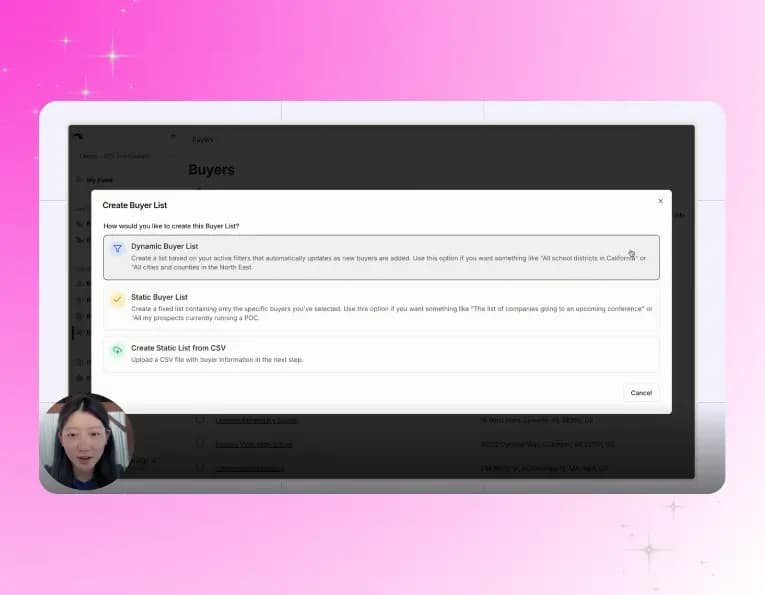 Create a conference campaignTurn conference badge scans into pipeline. Import your contact list, surface buying signals across every account you met, and follow up with context.